These are real Rzian houses, each designed for the family that asked for it and built on their own land in 270 days. Read each elevation slowly. The roof, the stone, the depth of every shadow is answering the same two things: Kerala's light, and its monsoon. We name the place and the home type, never the family.
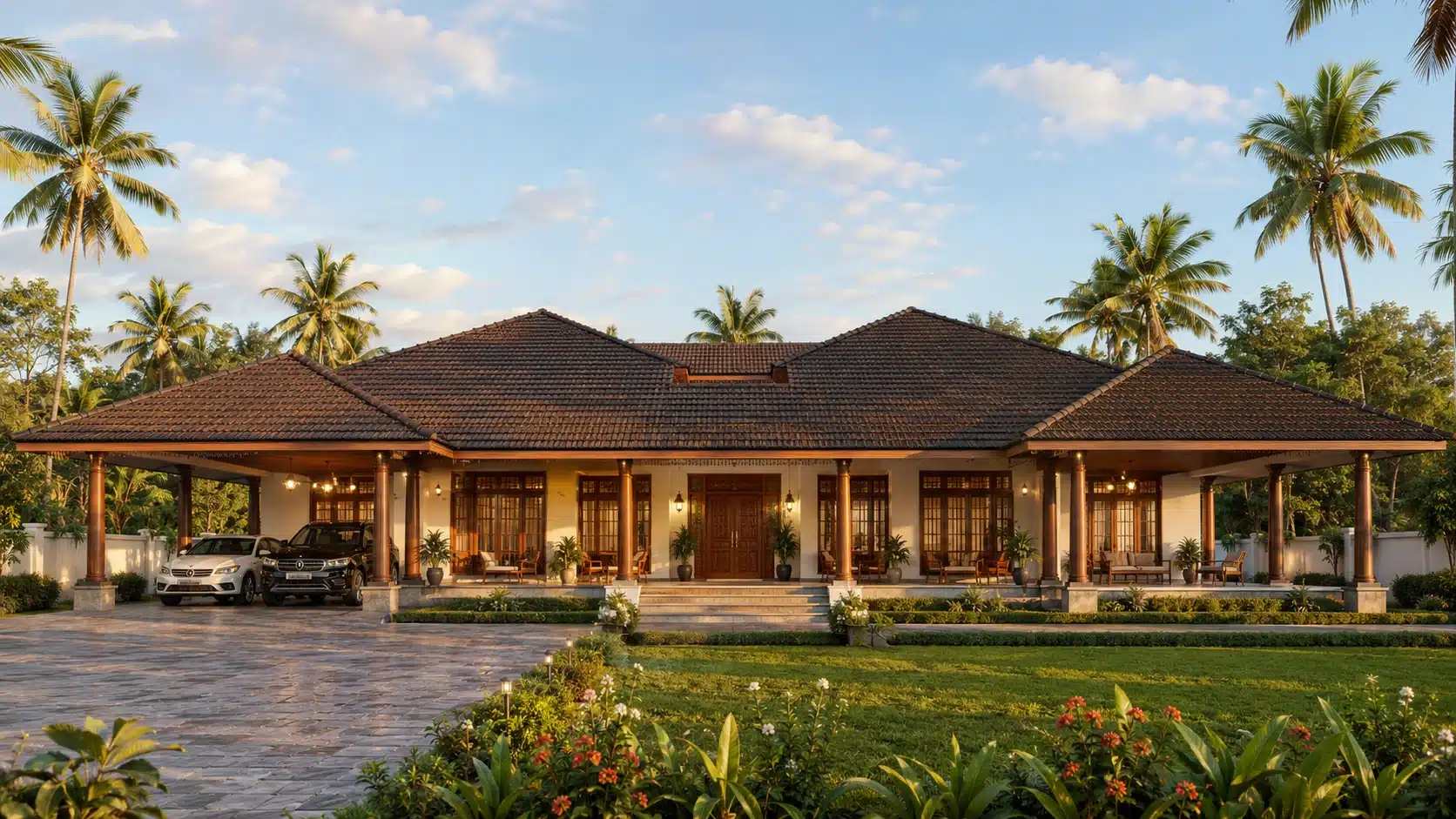
Built so that no one in this family ever climbs a stair to get home.
Five bedrooms, one level. The plan was asked to spread rather than stack, so that grandparents, parents and children share the same ground, the same verandah, the same first hour of morning light. That verandah is the real living room of the house. It runs the full width of the front on slender columns, and the family drifts onto it at dusk while the cars are still cooling in the porch. Hipped Mangalore-tile roofs step down softly over each wing; white lime walls hold the afternoon heat at the door. A coconut grove closes the plot on three sides, and the house simply settles into it.
A single-floor home of this width asks the roof and the shade to work hard, and here they do. The hipped tile roofs carry deep eaves that throw monsoon water clear of the walls and keep direct sun off every opening from mid-morning onward. Lime-finished walls let the structure breathe through the humid months instead of trapping damp inside. With every room sitting on one slab, the house drains, ventilates and ages as a single piece, and there is no staircase to plan a life around as the years pass.
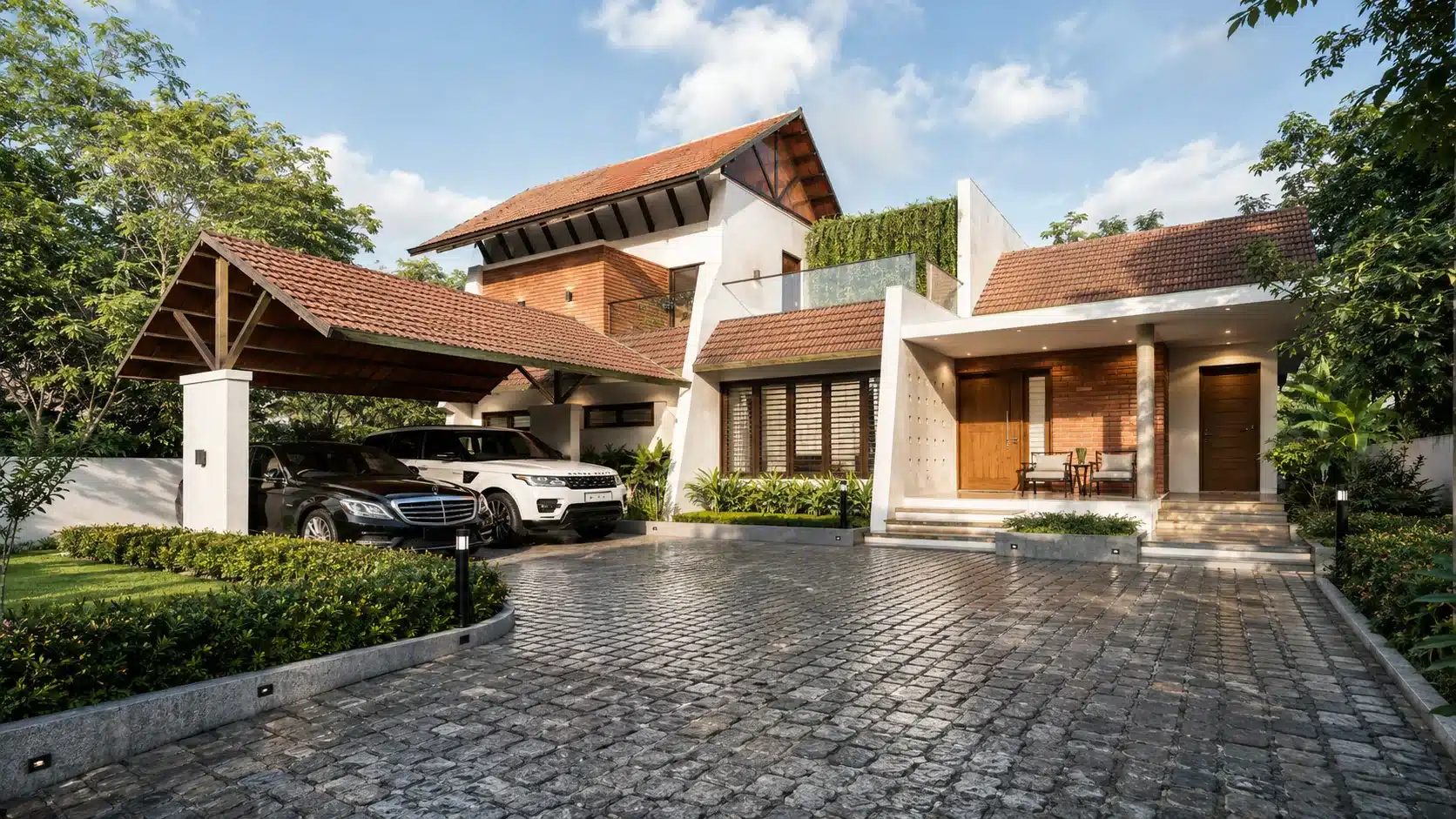
For the family that wanted to come home to Kerala without leaving the present behind.
The brief is written across the elevation for anyone to read. On the left, a traditional tiled gable on an exposed timber truss shelters the cars and quietly salutes the houses these owners grew up in. On the right, crisp white volumes and a teak-lined sit-out say just as plainly that this is a home for now. Holding the two halves together is a wall of laterite, the warm red stone quarried across Kerala, with a planted terrace softening the line where the roof meets the sky.
Laterite is the quiet hero of this facade. Cut from the ground a short drive away, it sits cooler than rendered block through the afternoon and deepens in colour with age rather than fading. The tiled gable does its work exactly where people step in and out of cars in the rain, while the flat roofs behind it hand the family a usable terrace and a planted edge that shades the upper windows. The teak at the entrance and the sit-out is chosen to take Kerala's wet air for decades without warping or checking.
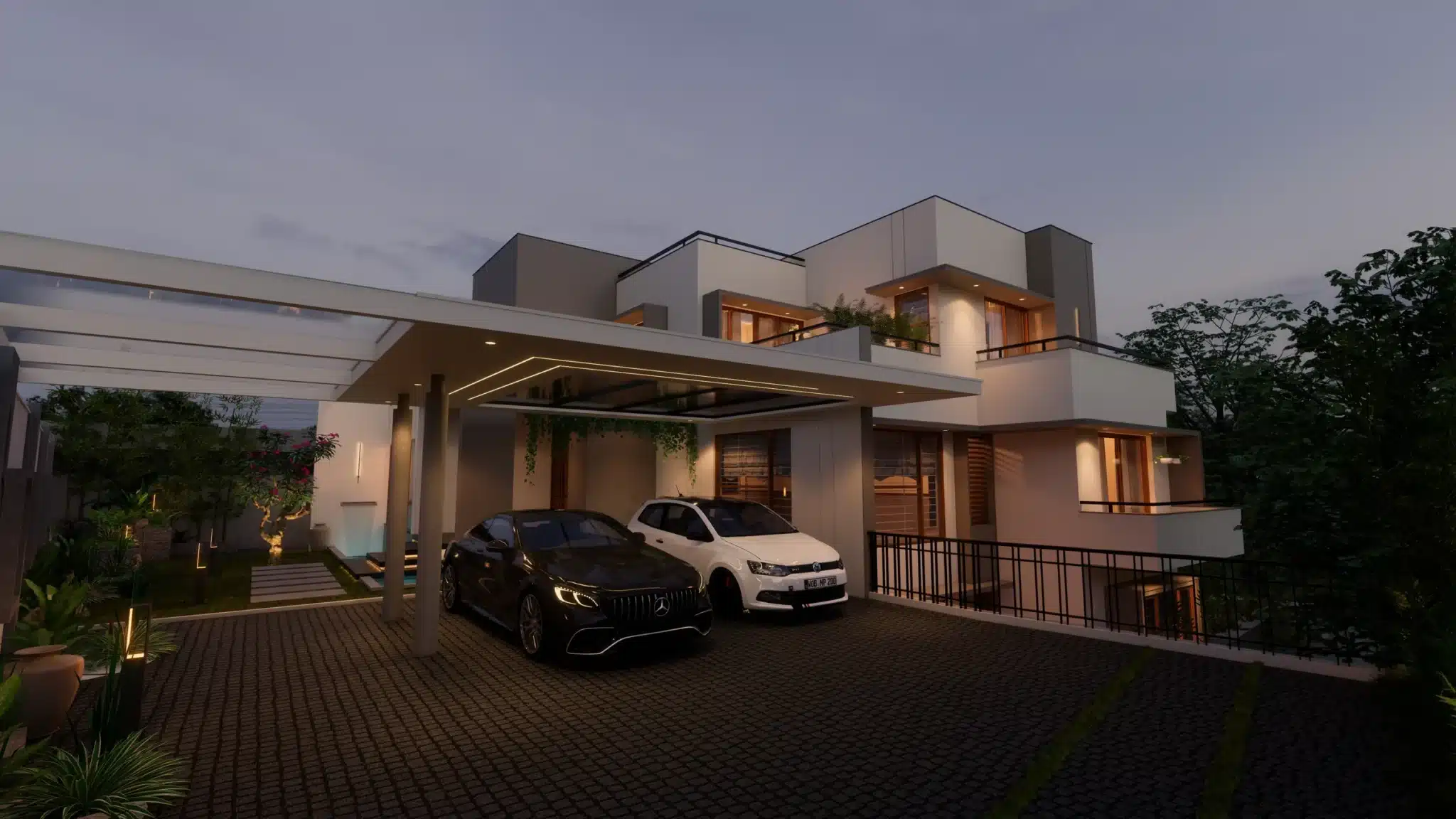
A tight city plot, answered by building upward and lighting the answer from inside.
Land is scarce in Thirumala, so this home climbs instead of sprawling. Flat-parapet volumes stack and shift across three floors, each one catching a different slice of sky. A cantilevered slab floats over the porch with no column standing in the way, its underside drawn in one warm line of light. Glass and slim teak louvres screen the rooms from a busy street, and a small water court cools the short walk to the door. After sunset the whole house glows from within, a lantern on the road.
Going vertical on a small plot is a discipline, not only a way to save space. The porch slab is cantilevered so the forecourt stays clear for two cars without a row of columns crowding the entrance. The teak louvres earn their place three times over: privacy from neighbours who sit close, shade on the western glass that takes the evening sun, and an open path for the sea breeze to draw through the rooms. The water court does the rest by plain evaporation, cooling the air a little before it ever reaches the living room.
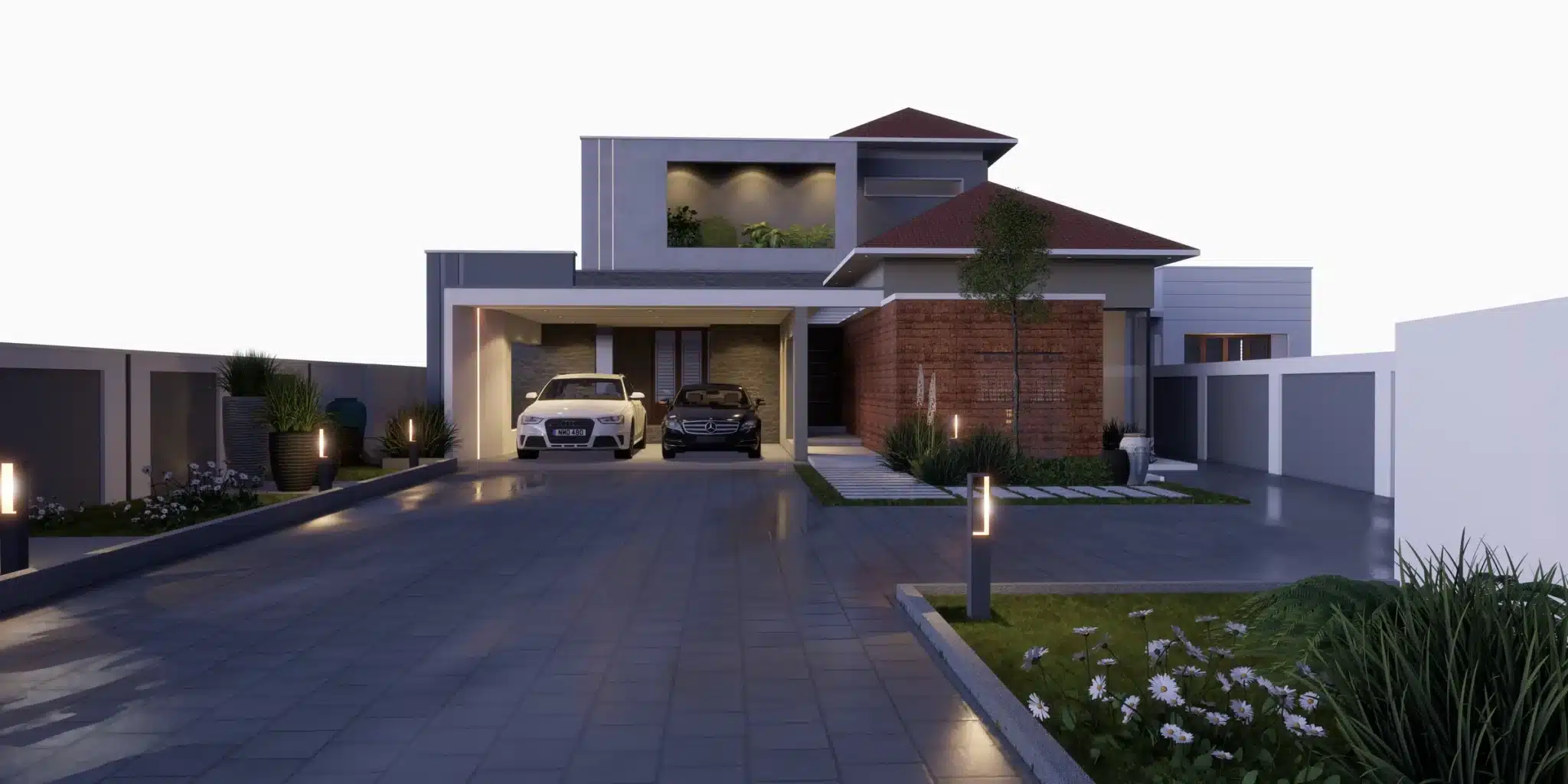
Modern lines, with the warmth of a brick you can put your hand on.
Clean two-storey massing, and then one warm decision: cap a corner with a pitched Mangalore-tile roof and face the entrance in exposed brick and laterite. What could have been another white box now feels like it grew out of Kerala soil. A first-floor niche is set back, planted and washed with light, a small green pause in an otherwise crisp face. Five bedrooms live behind it, and the house never once feels heavy carrying them.
The exposed brick is doing real work here, not playing at decoration. Its mass takes in the day's heat slowly and gives it back after dark, so the rooms behind hold an even temperature without leaning hard on air conditioning. The tile roof sheds the heaviest monsoon off the most exposed corner of the house, and the recessed niche keeps the high sun off the upper windows it shelters. Brick and laterite also age with grace in this climate, gaining character exactly where a painted render would streak and stain.
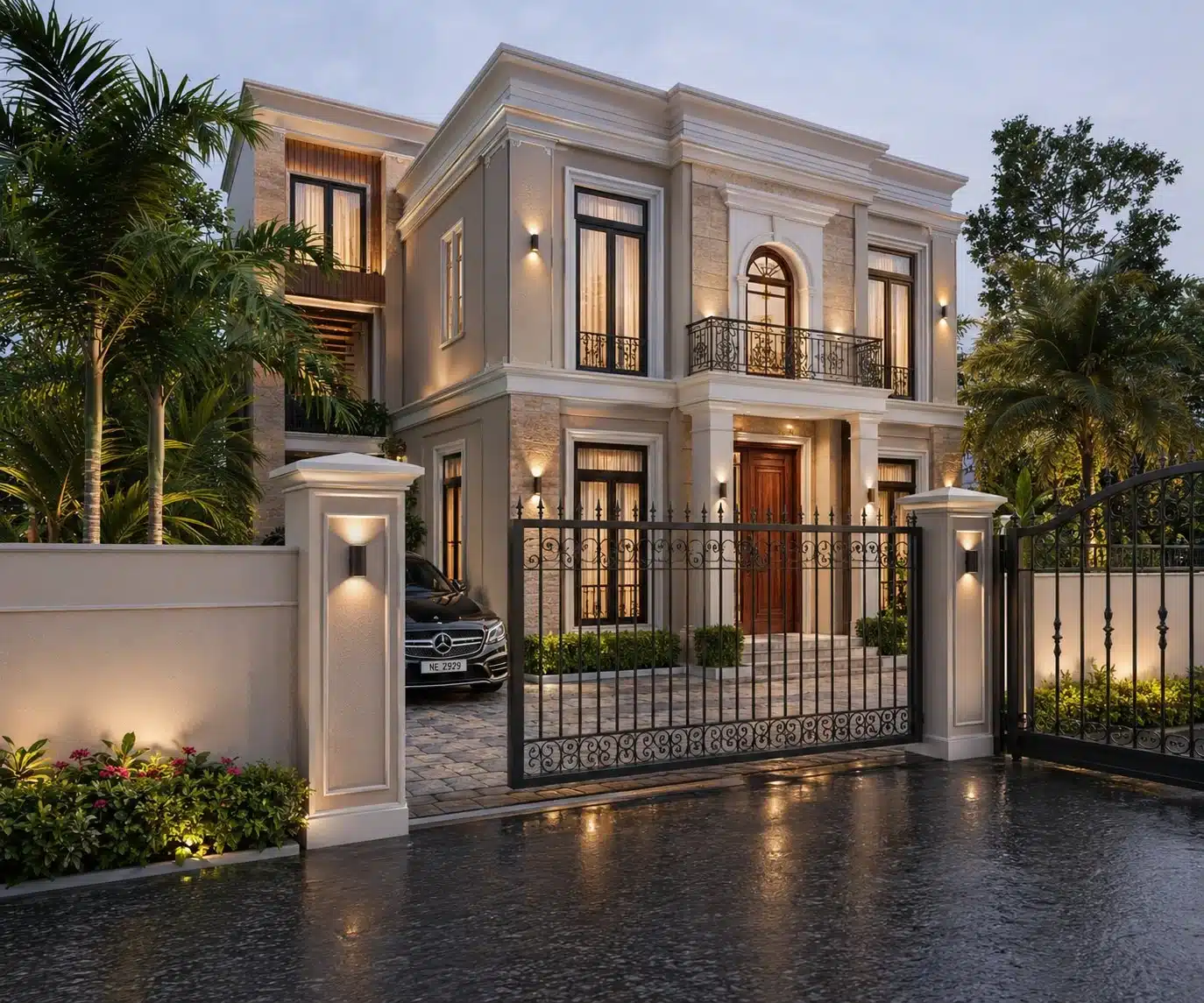
A house that arrives at its gate with the composure of an older world.
Symmetry runs the length of this elevation. Cornices and pilasters frame each bay, an arched window crowns the entrance, and a wrought-iron balcony looks down over the gate. The ground floor is dressed in cut stone; lamp-topped pillars and an ornamental iron gate close the compound. Lit at dusk and mirrored in a rain-wet driveway, it carries the calm authority of a classical villa, built for a family that wanted that formality waiting at the front door.
Classical does not have to mean impractical in this climate. The deep window reveals and the covered balcony keep sun and rain off the openings, the same job a traditional verandah does, simply dressed in a different language. The cut-stone base takes the splash-back of monsoon rain where a rendered wall would mark within a season, and the raised plinth lifts the living floor clear of the wettest weeks of the year. Behind the formal face, the plan still ventilates like any well-built Kerala home.
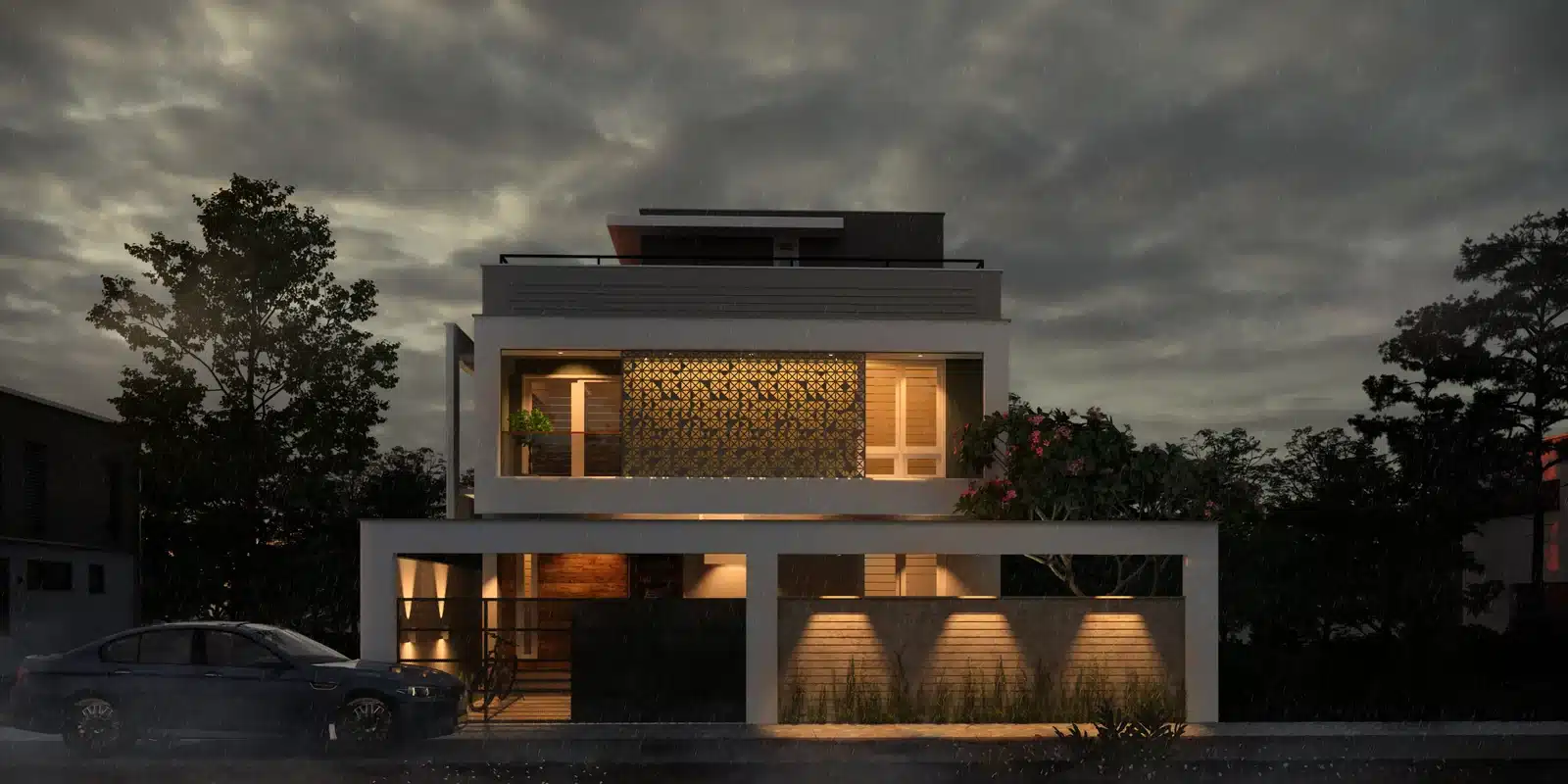
Proof that a small Trivandrum plot can still hold a home that stops you on the road after dark.
Not every family is building on acres. This is a compact home on a tight urban plot, and it answers the constraint by living upward and saving its drama for the evening. The living floor opens wide to the street, then veils itself behind a golden CNC-cut jaali screen that glows with the light held behind it. Below, a stone-faced plinth wall is washed from within by recessed lamps; above, a small roof terrace reclaims the open ground the plot could not spare. A teak door, a slim stair, a flowering creeper at the edge. In the monsoon dusk, the whole house reads as one warm lantern on a dark street.
A small plot rewards every clever move, and the jaali screen is the cleverest one here. It lets the living room take a full wall of glass for light and air, then filters the view both ways so the family keeps its privacy from a street that sits close. The same screen cuts the low evening sun before it ever touches the glass. The stone-faced plinth wall shrugs off monsoon splash where a painted base would stain within a season, and the roof terrace hands back the garden the ground floor had to give up. A modest footprint, designed to live far larger than its number suggests.